Aeroplanes are not just for ferrying passengers; they are bustling hubs for cargo, including shipments of dangerous goods. Each year, over 1.25 million of these shipments are processed by specialists, like the SATS Cargo Dangerous Goods Operations Team.
Dangerous goods are items or substances that can pose risks to health, safety, property, or the environment if not handled correctly during transport.
These can include flammable, toxic, corrosive, or reactive materials that require specialised handling and strict compliance during air transport. Even seemingly harmless items like hand sanitisers or spray paint can turn hazardous when airborne.
That’s why ensuring their safe transport demands keen attention to detail and strict safety measures.
Meet Sathish, the Duty Manager in charge of keeping things smooth in the warehouse where hazardous materials are stored and processed.

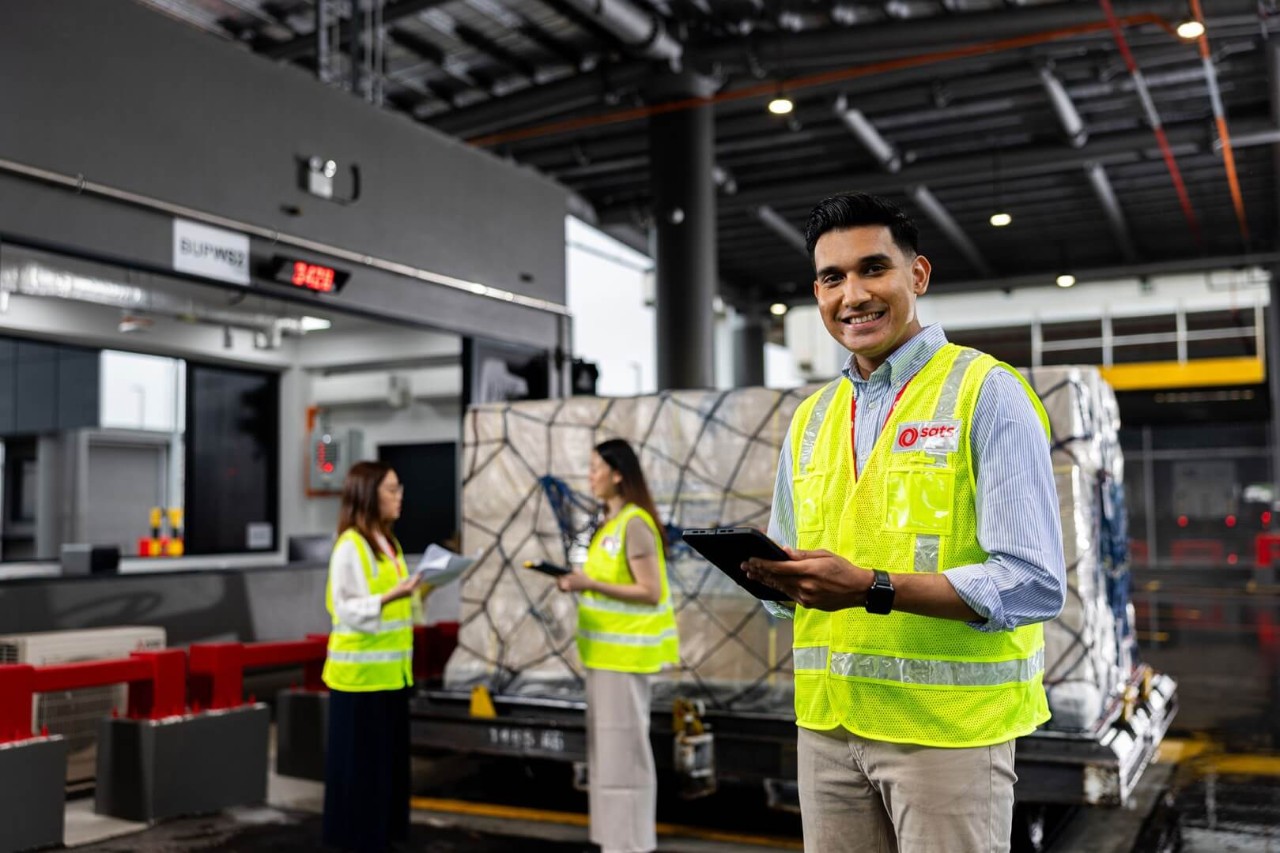
Sathish Kumar, Duty Manager for Dangerous Goods Operations (SATS Cargo)
His journey in this role started with a fascination for airports, leading him to SATS in 2019 through a Work-Study Diploma Programme. Rising from an exemplary specialist to becoming the Duty Manager, Sathish has earned praises from his supervisor and accolades like the Employee of the Month Award.
Rather than sweating over the words “dangerous” and “hazardous,” Sathish thrives on the adrenaline of his job. “In Dangerous Goods Operations, it’s like solving a puzzle every day,” he explains. “I love the challenge.”

Two of Sathish’s colleagues inspecting a cargo containing dangerous goods
At SATS Cargo, the Dangerous Goods Operations team consists of licenced professionals who stay updated with regular refresher courses.
“We are dealing with lives and property. Staying vigilant is a must,” Sathish stresses.
Their eagle eyes even spot undeclared dangerous goods amidst routine cargo checks, a critical safeguard in dangerous goods handling where even small errors can pose significant risks.
Inside the warehouse, handling hazardous materials is a meticulous process. From inspection to labelling and storage, every move follows strict protocols aligned with IATA Dangerous Goods Regulations and global aviation safety standards.
For example, cold rooms for dry ice and dedicated compartments for radioactive items ensure everything is in its place.
“Safety is not just for the goods, it’s for our team, too,” Sathish notes.
The team always suits up in their personal protective equipment, like safety vests and shoes, and stays ready for emergencies such as fire or chemical spillage – reinforcing that dangerous goods operations require constant vigilance and discipline.

One of the Dangerous Goods Storage Areas at the warehouse
Despite the hustle, Sathish enjoys the thrill of problem-solving. “Every day brings a unique challenge,” he says. “It’s my chance to make a difference.”
It's a responsibility he takes seriously, because safe dangerous goods shipping is critical to keeping global supply chains moving and protecting lives in the air and on the ground.
Q: What is dangerous cargo in air freight?
Dangerous cargo, also known as dangerous goods (DG), refers to items or substances that can pose risks to health, safety, property, or the environment during transport. These include materials that are explosive, flammable, toxic, corrosive, or radioactive.
Q: How many classes of dangerous goods are there?
There are nine classes of dangerous goods, defined under international aviation regulations. These include explosives, gases, flammable liquids, flammable solids, oxidising substances, toxic and infectious substances, radioactive materials, corrosives, and miscellaneous hazardous materials. This classification system helps ensure each type of dangerous cargo is handled, stored, and transported safely.
Q: What happens if dangerous goods are not declared or handled properly?
Undeclared or incorrectly handled dangerous goods can cause serious safety risks, including fire or chemical reactions during flight. Non-compliance can also lead to shipment rejection, fines, or legal penalties.
Q: Who is responsible for the safe shipping of dangerous goods?
Safe handling is a shared responsibility across the supply chain, including shippers and freight forwarders, ground handling teams like SATS, and airlines and operators. All parties must comply with international standards to ensure safe transport.
Q: What regulations govern dangerous goods cargo handling?
Dangerous goods in air cargo are regulated by global standards such as ICAO Technical Instructions and IATA Dangerous Goods Regulations. These frameworks define how goods must be classified, packed, labelled, and transported.