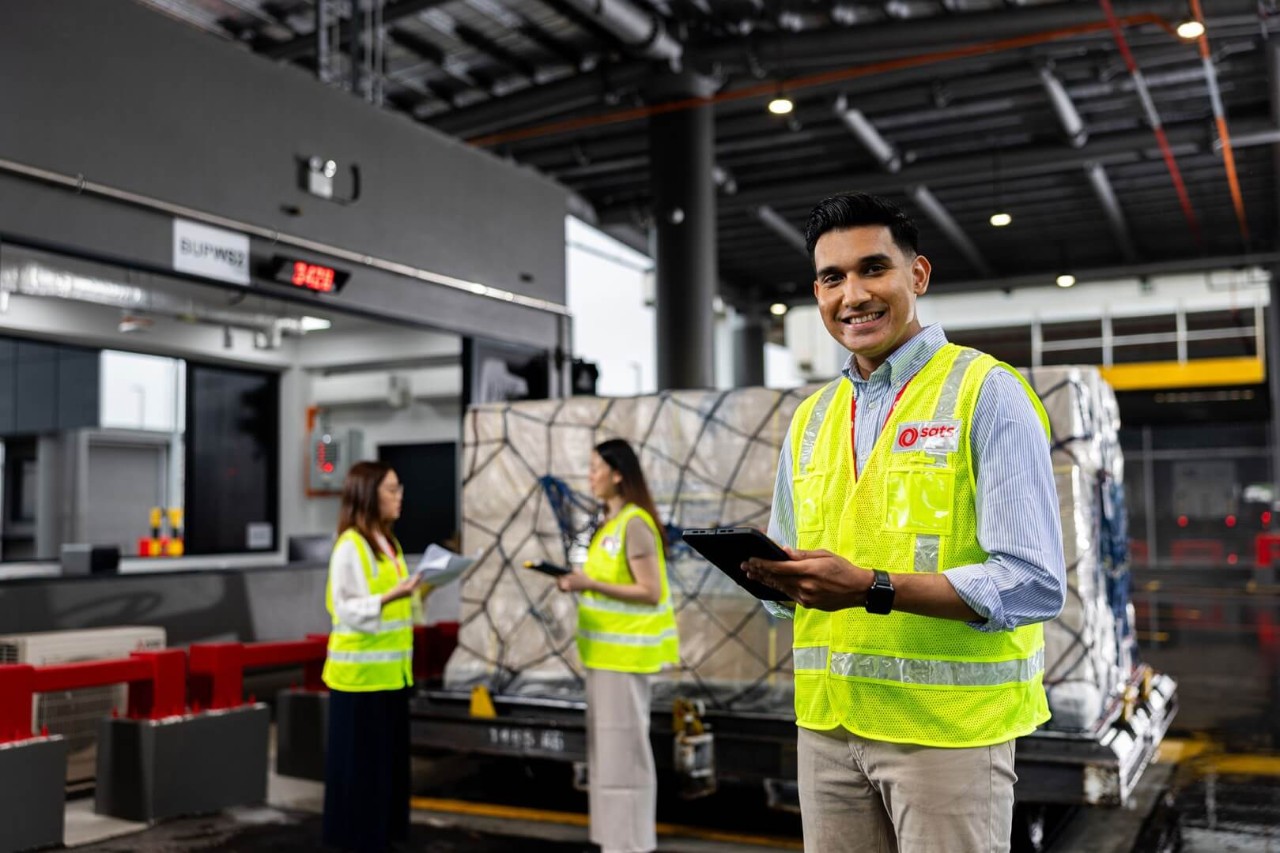
Every day, the SATS Group relies on a global supply chain to keep food production running, cargo moving, and airport ground operations going. Ingredients come from different locations. Equipment is sourced, manufactured, and transported long before it arrives on our sites.
Each step in this supply chain involves a decision. On its own, it might seem minor. But taken together, these decisions shape SATS’ environmental, social, and governance (ESG) footprint in very real ways.
This is where supply chain sustainability truly begins. Not on the ground, but much earlier. Upstream, in decisions that most people never see. It carries through downstream, in how materials are used, managed, and eventually disposed of.
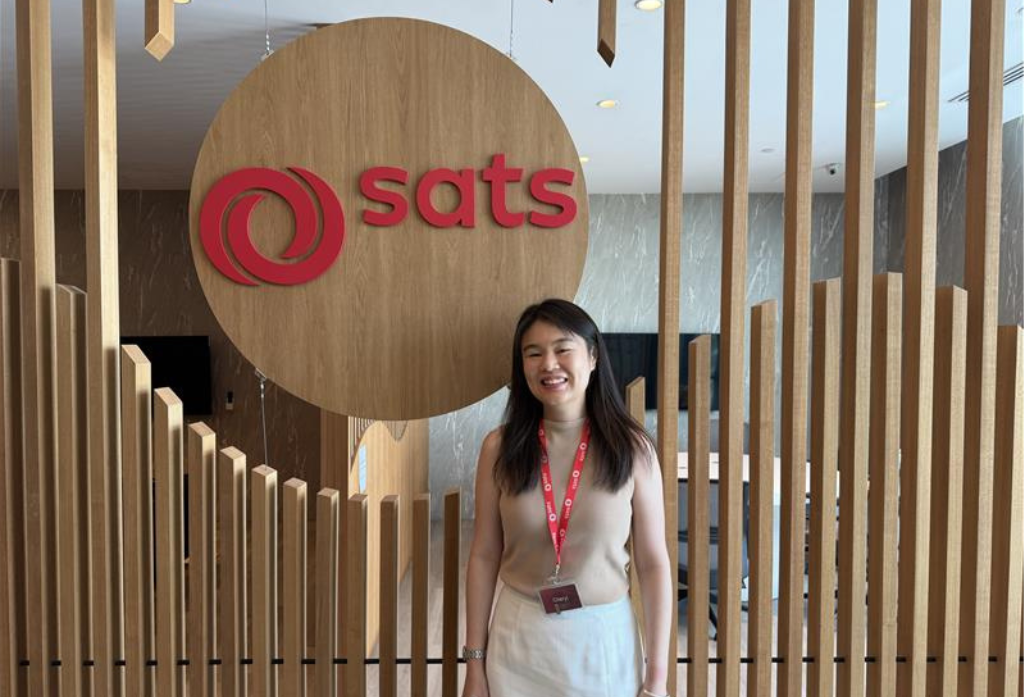
Cheryl Looi, Project Manager, Sustainable Sourcing & Scope 3
Cheryl has been with SATS for over three years. A large part of her role focuses on Scope 3 emissions – those that come from the supply chain and often make up the biggest share of an organisation’s footprint.
“That’s where a lot of our impact sits,” she says. “But it’s also where collaboration matters most. You can’t do this work alone.”
While much of SATS’ operations are visible on the ground, many sustainability considerations take shape long before that. By the time a meal is served or a flight is handled, earlier choices around sourcing, design, and processes have already helped shape the outcome.
Much of this work happens largely behind the scenes, where Cheryl and the wider SATS Sustainability Team focus on building visibility into emissions linked to operational activities – strengthening data and reporting, and working closely with operational teams to identify where insights, influence, and improvement are possible.
As expectations around sustainability continue to grow across food, aviation, and logistics, customers and partners are paying closer attention to the supply chain. Where do materials come from? How are suppliers managed? What happens before goods even reach SATS?
So, what really is supply chain sustainability?
In practice, supply chain sustainability means understanding the impact of a product, service, or operational decision beyond the company's own facilities: from sourcing and supplier practices to transport, usage, waste, and end-of-life disposal.
Cheryl explains it simply. “It’s about recognising that sustainability doesn't start or stop at SATS. A large part of our impact sits outside our direct operations – in the goods and services we buy, the suppliers we work with, and what happens after those goods are used, including how they’re transported, handled, and eventually disposed of. Looking at our entire supply chain helps us understand where our real impact lies.”
In other words, supply chain sustainability is about analysing the impact of the wider value chain.
For SATS, supply chain sustainability becomes practical when teams can see the data behind their choices.
This is where Cheryl’s role comes in – turning the bigger picture into something practical.
She works closely with procurement teams, business units, suppliers, and external partners. She analyses data, develops sourcing guidelines, and creates training materials so teams can factor sustainability into everyday decisions.
“My job is really about helping people make sense of complexity,” Cheryl says. “And then turning that into something practical.”
That practicality is where sustainability stops being abstract and starts showing up in daily work.
![[People] - Supplier-Engagement-Workshop-Cheryl](/media/careers-our-people/sustainability-logistics-and-supply-chain/_jcr_content/root/responsivegrid/container/container_1453597496/image.coreimg.png/1775725658014/supplier-engagement-workshop-cheryl.png "[People] - Supplier-Engagement-Workshop-Cheryl")
Cheryl shares about SATS’ sustainability programmes during one of the supplier engagement workshops
“When we look closely at the emissions data behind what we buy across the business, it becomes clearer where we can make the biggest difference,” she explains.
In food operations, that means understanding the impact of ingredients as well as reducing and managing food waste, while improving how energy and refrigerants are managed in our own production facilities.
In cargo and ground handling, sustainability shows up in different ways: encouraging the sourcing of more efficient equipment, supporting vehicle electrification with partners, and adopting lower-emission technologies where possible.
“These are very real, everyday decisions,” Cheryl says. “They’re practical sustainability choices – small changes across sourcing and operations that add up over time.”
![[People] - Global-Sustainability-Team-SATS](/media/careers-our-people/sustainability-logistics-and-supply-chain/_jcr_content/root/responsivegrid/container/container_1453597496/image_1099192965.coreimg.png/1775725774127/global-sustainability-team-sats.png "[People] - Global-Sustainability-Team-SATS")
The SATS Sustainability Team supports supply chain sustainability, ESG reporting, and supplier engagement
What people don’t always see is how much coordination sits behind those changes.
“A lot of people think sustainability is just about initiatives or reports,” Cheryl says. “But a big part of the work is actually relationship-building and stakeholder and project management.”
Her team works across procurement, finance, operations, and communications, bringing people with different priorities together. They also manage data across multiple regions, suppliers, and systems.
“It takes time,” she says. “And it takes trust.”
That behind-the-scenes work is what allows sustainability to become part of how the business operates – not something separate from it.
Suppliers play a big role in that journey. SATS works with them through ESG assessments and questionnaires to better understand environmental, social, and governance practices.
“These help us understand risks,” Cheryl explains. “But more importantly, they help start conversations and open doors for future collaboration opportunities.”
Sustainability, she adds, works best when suppliers and partners move forward together, not when it’s treated as a one-off requirement.
Of course, none of this is easy. Building a more sustainable supply chain across a global network takes time. Aligning people, data, and processes is rarely straightforward.
“Sustainability often means new ways of working,” Cheryl says. “Change doesn’t happen overnight.”
Better systems and stronger data governance help. They make information clearer and decisions easier. For SATS, this work matters beyond the organisation itself.
“By managing these impacts responsibly, we not only reduce our own carbon footprint but also support the sustainability goals of our customers and partners,” Cheryl says. “Many of them are airlines and airports working toward their own climate targets.”
What keeps her going is knowing the work makes a difference.
“I like seeing people start to ask different questions,” she says. “And make more informed choices.”
She also values working with people, across the SATS Group and the wider industry, who genuinely want to do business better.
“No one can solve supply chain sustainability alone,” Cheryl says. “You need suppliers, partners, and teams moving together.”
Q: What is supply chain sustainability?
Supply chain sustainability is the practice of understanding and managing environmental, social, and governance impacts across the full value chain. This includes the goods and services a company buys, the suppliers it works with, how materials are transported and used, and what happens after those goods reach the end of their life.
Q: Why does supply chain sustainability matter in logistics?
Supply chain sustainability matters in logistics because every movement of goods involves decisions around sourcing, transport, energy, equipment, packaging, waste, and supplier practices. Across a large operational network, small improvements in these areas can add up over time.
Q: What are Scope 3 emissions?
Scope 3 emissions are indirect emissions that occur across a company's value chain, including emissions linked to suppliers, purchased goods and services, transport, waste, and other activities outside the company's direct operations.
Q: How does SATS approach sustainable supply chain management?
SATS approaches sustainable supply chain management by building visibility into emissions, strengthening data and reporting, engaging operational teams, and working with suppliers and partners to identify areas for improvement.
Q: How do suppliers contribute to supply chain sustainability?
Suppliers contribute by improving transparency, sharing ESG information, and working with companies on better environmental, social, and governance practices.