Most people don’t think twice about the packaging their food comes in. But behind every box, tray, or container is a series of design decisions that shape how food moves through the supply chain and what happens to it after.
Meet Wei Kiat, Packaging Designer at SATS Global Innovation Hub. His work sits at the intersection of creativity and technical know-how, shaping packaging that is visually appealing, functional, brand-aligned, and built to work in the real world.

Law Wei Kiat, Packaging Designer, SATS Global Innovation Hub
Wei Kiat’s work starts long before packaging reaches a production line and long before customers ever see it.
You’ll often find him at the SATS Global Innovation Hub developing structural concepts, creating dielines, and preparing production-ready files across a wide range of materials and manufacturing processes. Each design needs to balance functionality, food safety, brand requirements, cost, operational feasibility, and sustainability.
“I work very closely with commercial, key accounts, operations, sourcing, and sustainability teams,” he explains. “Packaging has to work across the entire supply chain, not just on paper.”
Today, much of Wei Kiat’s work sits within SATS’ food business, where he supports sustainable food packaging design for customers in Singapore and overseas. At the same time, he provides material recommendations and design guidance to other business units, including cargo and ground handling, when the need arises.
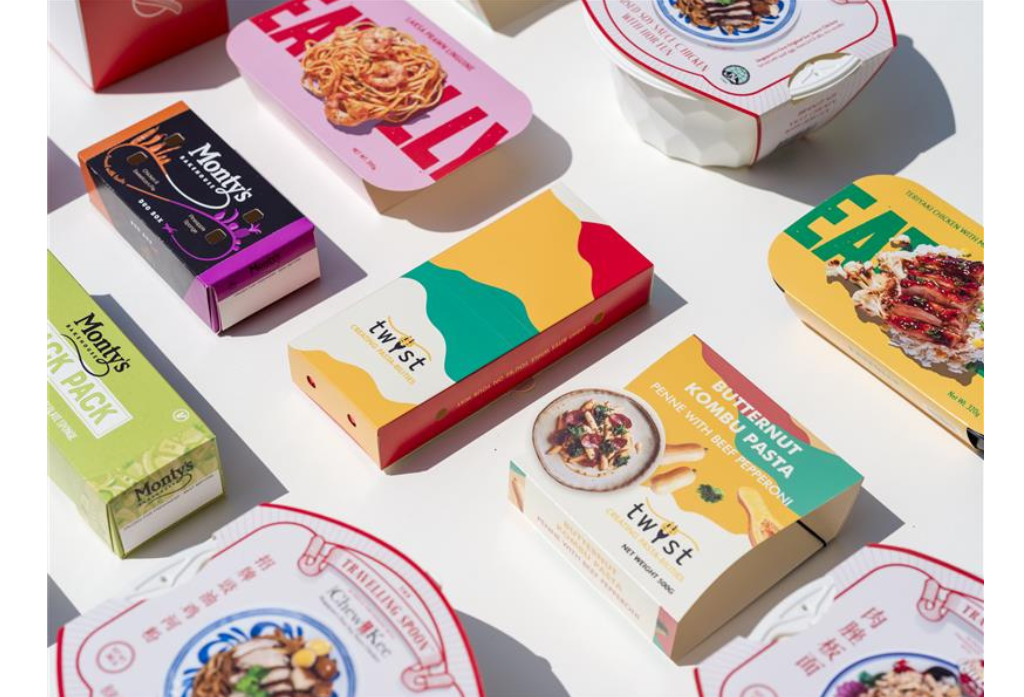
Packaging design concepts developed by the Global Innovation Hub team
Sustainable packaging design is the process of creating packaging that reduces environmental impact throughout its lifecycle. This includes material selection, manufacturing, transportation, use, reuse, recycling, and disposal.
When Wei Kiat talks about sustainable packaging design, he’s not just thinking about materials. He’s thinking about the full journey of a pack – where it comes from, how it’s made, how it moves through the supply chain, and what happens once it’s been used.
“Sustainable packaging design aims to minimise environmental impact throughout its life cycle,” he explains. “That means looking at everything, from material sourcing and production, to transportation, use, and disposal.”
In practice, that means making the right choices early in the design process, such as:
using responsibly sourced or recycled materials
reducing unnecessary layers and components
avoiding mixed substrates that are hard to recycle
designing for reuse where possible
optimising size and weight to improve transport efficiency
cutting down on inks, coatings, and excess treatments, and
working closely with suppliers to ensure sustainability claims are genuine.

Packaging design concepts developed by Wei Kiat for customers across overseas markets
For Wei Kiat, packaging is where sustainability becomes tangible and scalable.
“Packaging has a direct and long-lasting environmental impact,” he says. “As designers, we have the ability and responsibility to influence that from the start.”
That’s why sustainability is never just an afterthought in his work.
“Packaging decisions made early can lock in environmental impact for years,” he explains. Even when budgets, timelines, or manufacturing constraints narrow the options, he treats sustainability as the baseline – not something to add on at the end if there’s time or budget left.
“It’s not just about choosing sustainable materials,” he explains. “It’s about making intentional design decisions that reduce waste, improve recyclability, and optimise resources without compromising food safety or the consumer experience.”
While packaging design may feel like a small detail, its impact travels far beyond the pack itself.
“Thoughtful sizing and lightweight formats improve shipping efficiency,” Wei Kiat says. “Durable packaging also reduces product damage, which prevents unnecessary waste.”
One example he often refers to is the square‑shaped Fiji water bottle. Its shape allows bottles to pack tightly, reducing wasted space, fitting more cartons on each pallet, and ultimately cutting down the number of trucks needed for transport. At the same time, the use of recycled PET lowers emissions further upstream.
“It’s a design that makes sense both commercially and environmentally,” he explains.
It’s a reminder of how sustainability and packaging design go hand in hand, and how even small design decisions can create meaningful impact across SATS’ supply chain and overall emissions.

Wei Kiat with the SATS Sustainability team he partners with to design sustainable food packaging for SATS’ businesses
Of course, trade-offs are part of every design decision. For example, some environmentally friendly materials may offer weaker barrier protection. Or making packaging more durable can mean using more material. Or consumer-friendly features like resealability often introduce mixed materials that make recycling harder.
“The challenge is finding the most responsible compromise,” Wei Kiat explains. “One that still meets food safety, operational needs, and sustainability goals.”
That balance depends on open conversations, shared priorities, and a willingness to work through constraints together.
And that’s where sustainable packaging design takes shape – not just in the materials chosen, but in the everyday decisions made across teams. Decisions that ensure packaging works for customers, for operations, and for the environment.
Q: What is sustainable packaging design?
Sustainable packaging design is the process of developing packaging that minimises environmental impact throughout its lifecycle, from material sourcing and production to transportation, use, recycling, and disposal.
Q: Why is sustainable packaging important?
Packaging affects material consumption, waste generation, transport efficiency, recyclability, and emissions. Decisions made during design can influence environmental impact for years.
Q: How can packaging reduce environmental impact?
Packaging can reduce environmental impact through responsible material choices, reducing unnecessary components, improving recyclability, enabling reuse, reducing weight, and optimising transport efficiency.
Q: What makes packaging recyclable?
Packaging is generally easier to recycle when it uses fewer mixed materials, avoids unnecessary coatings, and is designed with existing recycling infrastructure in mind.
Q: How does packaging affect transportation?
Packaging size, shape, and weight influence shipping efficiency. Thoughtful design can reduce wasted space, improve pallet utilisation, reduce transportation requirements, and lower associated environmental impacts.